
.svg)
.svg)
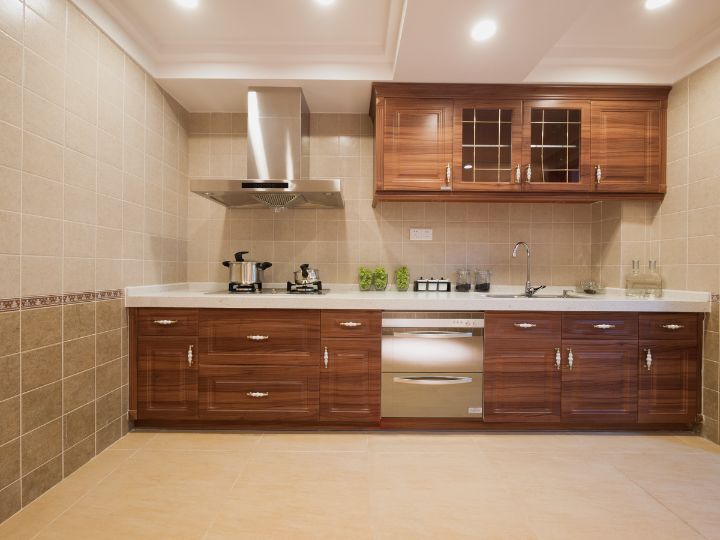
Cabinet Hardware & Finishes: The Jewelry of Your Kitchen

There's a moment in almost every kitchen remodel where the cabinets are installed, the countertops are in, and everything looks great — but something still feels unfinished. Then the hardware goes on. The pulls, the knobs, the hinges. And suddenly the whole kitchen snaps into focus.
That's why we call cabinet hardware the jewelry of the kitchen. Just like the right accessories can elevate an outfit from ordinary to put-together, the right kitchen hardware pulls a space from "nice renovation" to "this is exactly what I wanted." It's a small detail with an outsized impact — and it's one that deserves more attention than most homeowners give it early in the planning process.
Let's talk about what to consider, what's available, and how to make choices you'll still love years from now.
Why Cabinet Hardware Matters More Than You Think
Here's a perspective shift that might be useful: cabinet hardware is one of the most visible design elements in your kitchen, and it's one you interact with dozens of times every single day. Every time you open a drawer, reach for a cabinet, or even just glance at the kitchen from the living room, you're seeing and touching your hardware.
That kind of daily interaction means the quality, style, and finish of your hardware affects your experience of the kitchen in a way that's hard to quantify but very real. Cheap hardware that wobbles, tarnishes quickly, or just doesn't feel right will quietly bother you. Hardware that's well-made, thoughtfully chosen, and properly installed will make every interaction with your kitchen feel just a little more satisfying.
And from a purely visual standpoint, hardware is what ties the whole design together. It connects your cabinet color to your countertops, your faucet to your light fixtures, your overall style to the details that define it. When everything is cohesive, you feel it even if you can't immediately articulate why the kitchen looks so good.
Understanding Cabinet Hardware Types
Before you can choose the right hardware, it helps to understand what you're actually choosing between. Cabinet hardware broadly breaks down into a few categories.
Knobs are single-point hardware — one screw, one contact point, typically round or square. They work well on cabinet doors and are often paired with pulls on drawers. Knobs tend to read as more traditional or classic, though modern designs have expanded what's possible in this category significantly.
Pulls — also called handles — are longer pieces mounted with two screws. They span a distance across the face of a drawer or door, giving you a more substantial grip and a more linear visual element. Bar pulls and cup pulls are among the most popular styles right now, and pulls in general tend to lean toward a more contemporary look, though there are traditional pull styles as well.
Cup pulls, specifically, have had a major resurgence in recent years. They're the arched, curved pulls that curve away from the cabinet face — often associated with farmhouse and Shaker-style kitchens. They look beautiful on lower drawers in particular and add a sense of warmth and handcrafted character to a kitchen.
Bin pulls are a variation on cup pulls with a more vintage or industrial aesthetic — they show up frequently in transitional kitchens that want a little edge.
Edge pulls and integrated pulls are worth knowing about too. These are used in handle-free or minimal kitchens where the hardware is either recessed into the cabinet edge or built into the cabinet door itself. If you've admired a seamless, modern European-style kitchen, chances are it was using integrated or edge pulls. They're a strong choice for ultra-contemporary designs.
Hinges are technically hardware too — and while they're often hidden on European-style frameless cabinets, they're a visible design element on inset cabinets where the door sits flush inside the frame. Exposed hinges, particularly in antique brass or matte black, can be a beautiful design feature rather than an afterthought.
Cabinet Finishes: The Foundation of Your Hardware Look
Once you understand the types of hardware, the finish is where style really comes into play. The finish is the surface treatment — the color and texture — of the metal, and it has more to do with the overall feel of your kitchen than almost any other hardware decision.
Here's a rundown of the most popular cabinet hardware finishes right now, and what they bring to the table.
Matte black has dominated kitchen design for several years now, and it's not going anywhere. It's bold without being flashy, works across a wide range of kitchen styles from modern to farmhouse to transitional, and reads as sophisticated and intentional. Matte black hardware on white or light gray cabinets is one of the most requested combinations we see in Phoenix-area kitchens. It's a strong, versatile choice — just make sure the rest of your fixtures (faucets, light fixtures, appliance handles) can tie in, because mixing finishes requires intention.
Brushed nickel has been a reliable, popular choice for years because it works with almost everything. It's warm without being yellow, modern without being cold, and coordinates easily with stainless steel appliances — which is still the dominant appliance finish in most homes. If you're not sure where to start and you want a finish that's proven and versatile, brushed nickel is a safe and genuinely good choice.
Polished chrome is cleaner and brighter than brushed nickel — more reflective, more contemporary. It works beautifully in sleek, modern kitchens but can feel clinical in warmer, more traditional spaces. It also shows fingerprints more readily than brushed finishes, which is worth keeping in mind in a high-traffic kitchen.
Brushed gold and unlacquered brass have seen a massive resurgence, and honestly, the results can be stunning when done right. Warm metallic tones add richness and depth to a kitchen in a way that cooler finishes simply don't. Brushed gold in particular — as opposed to the shinier, more yellow gold of previous decades — reads as refined and current. It pairs beautifully with white cabinets, deep navy or forest green cabinetry, and natural wood tones. If you want your kitchen to feel warm and elevated, warm-toned hardware is worth serious consideration.
Antique brass and oil-rubbed bronze lean more traditional and are excellent choices for kitchens that want a timeless, classic, or period-appropriate feel. They add character and a sense of age in the best possible way — as if the kitchen has always been there.
Satin nickel sits between polished chrome and brushed nickel — slightly warmer than chrome, slightly more refined than brushed. It's a subtle distinction that matters most in more design-forward projects where finishes are being coordinated meticulously.
Mixing Metals: Rules and When to Break Them
The old design rule used to be: pick one metal finish and stick with it throughout the entire kitchen. Consistency, cohesion, done.
That rule has been loosened considerably in recent years, and today, intentional mixed-metal kitchens are genuinely beautiful. The key word there is intentional. Mixing finishes works when there's a clear logic behind it — a dominant finish and an accent finish, used with purpose.
A common approach is matte black hardware on the cabinets paired with brushed gold on the faucet and light fixtures. Or brushed nickel cabinet pulls with antique brass knobs on an island to define it as a separate visual element. When the mixing feels deliberate and considered, it adds depth and personality.
What doesn't work is mixing finishes haphazardly — a little chrome here, some brushed nickel there, a random brass knob that snuck in from a previous renovation. That reads as unfinished rather than designed. If you're going to mix, have a reason for it.
This is one of those conversations we genuinely enjoy having with clients during the design phase, because the right answer is always specific to the kitchen, the cabinetry, and the overall design direction.
Sizing and Proportion: Getting the Scale Right
Hardware that's the wrong size for your cabinets is one of the most common mistakes we see — and it's an easy one to make when you're ordering from a sample or online.
The general principle is that hardware should be proportional to the cabinet door or drawer face it's mounted on. Oversized pulls on small upper cabinet doors look clunky. Tiny knobs on wide, deep drawer fronts look lost. Getting the scale right requires actually holding samples up against the real cabinets — something we always recommend before finalizing any hardware order.
As a loose guideline, drawer pulls are often sized at about one-third the width of the drawer face. So a 24-inch wide drawer front might take an 8-inch pull comfortably. Long, horizontal bar pulls across full-width drawers are a popular modern look, but they require accurate proportioning to read as intentional rather than oversized.
Cabinet Finish Material: Wood, Paint, and Everything Between
It's worth clarifying that when people talk about "cabinet finishes," they sometimes mean the finish of the cabinet itself — the surface treatment of the wood or material — not just the hardware finish. Both matter and they need to work together.
Painted cabinets in white, off-white, gray, or navy are dominant right now across all kitchen styles. A well-applied painted finish looks crisp and clean and is one of the most transformative choices in a kitchen remodel. The quality of the paint finish matters enormously — a cheap spray job will chip and show wear quickly, while a professionally applied finish in a quality paint holds up beautifully for years.
Stained wood cabinets have come back in a big way after years of being out of style. Natural wood tones — particularly lighter European white oak and warmer walnut stains — add organic warmth that painted cabinets can't replicate. Stained finishes show the grain and character of the wood, which is part of their appeal.
The finish of the cabinet and the finish of the hardware need to be considered together. Dark stained cabinets with matte black hardware can disappear into each other unless there's enough contrast elsewhere in the space. Light painted cabinets give you the most flexibility with hardware finishes because almost anything reads clearly against a lighter background.
Quality Matters: Don't Cut Corners Here
One last thing worth saying plainly: hardware is not the place to cut the budget to the bone.
Cabinet hardware is inexpensive relative to the total cost of a kitchen remodel — typically a few hundred to a couple thousand dollars for a full kitchen, depending on the number of pieces and the quality tier. But you interact with it every single day, and cheap hardware shows its weakness quickly. Hollow pulls that feel flimsy. Finishes that rub off within a year. Screws that won't stay tight. These are small frustrations, but small frustrations in a kitchen add up.
Investing in mid-to-upper quality hardware from reputable manufacturers is one of the highest-ROI decisions you can make in a kitchen remodel. The cost difference between decent hardware and genuinely good hardware is relatively small. The difference in how the kitchen feels and performs over time is not.
Let's Get the Details Right Together
At The Contractor Guys, we believe that a great kitchen remodel lives or dies in the details. The countertop is stunning — but what hardware anchors it? The cabinets are beautifully painted — but what finish brings them to life? These are the conversations we have with every client, because we're not done until every detail is right.
We've helped hundreds of Phoenix-area homeowners — in Tempe, Scottsdale, Mesa, Chandler, Gilbert, and beyond — make hardware and finish decisions they absolutely love. If you're planning a kitchen remodel and want a team that's just as invested in the details as you are, we'd love to talk.
Latest Blogs



Transform your dream home into reality with our premier renovation services!
Book a call with us today and let's create the perfect space tailored just for you.