
.svg)
.svg)
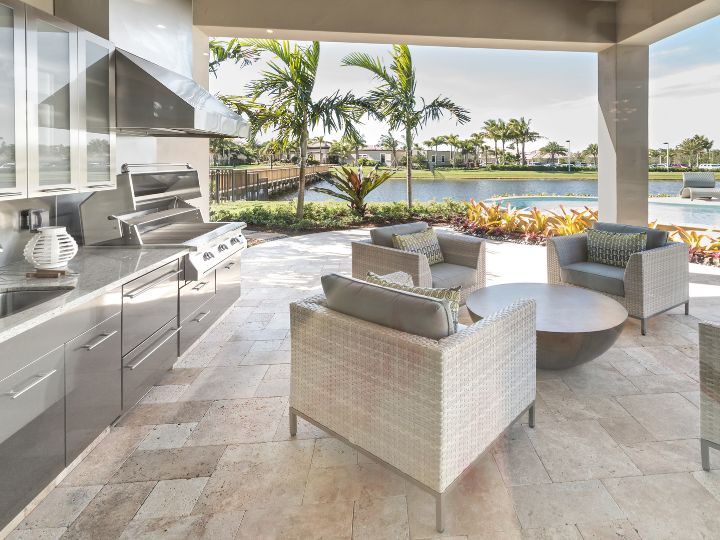
Outdoor Kitchen Design: Grill Master's Paradise

There's a version of summer entertaining that most homeowners settle for. The portable grill dragged out from the garage. The trips back inside to grab utensils, refill drinks, grab the plate you forgot. The host missing half the conversation because they're managing a grill that's physically separated from where everyone else is gathered.
And then there's the version where the cooking, the prep, the drinks, and the conversation all happen in one place — outside, under a covered patio, with everything you need within arm's reach. Where the grill is built in, the counter space is right there, the drinks are cold in the outdoor fridge, and you never have to disappear inside to keep the party going.
That second version is what a well-designed outdoor kitchen actually delivers. And in Arizona, where the evenings from September through May are genuinely some of the best weather you'll find anywhere, it's one of the highest-impact investments you can make in how you use and enjoy your home. Here's how to think about designing one that actually works.
Why Outdoor Kitchen Design Matters More Than the Equipment
Most people approach an outdoor kitchen project by thinking about the grill first. What brand, what BTUs, how many burners. And while the equipment matters, the grill is actually the last piece of the puzzle — not the first.
The first question in any good outdoor kitchen design is how the space will function. Where does food prep happen? Where do guests stand and gather while you're cooking? Where does the finished food go before it hits the table? How does the outdoor kitchen connect to the indoor kitchen? Where does trash go? Where are the drinks?
These aren't complicated questions, but they're the ones that determine whether your outdoor kitchen ends up being a genuinely useful extension of your home or a beautiful setup that's more awkward to use than you expected. Good outdoor kitchen design answers all of them before a single block is laid.
The layout is where that happens. The most functional outdoor kitchens are designed around the same work triangle principle as indoor kitchens — keeping the grill, the prep surface, and the storage or serving area in a logical relationship to each other. An L-shaped or U-shaped layout works well for larger spaces and creates a natural area for guests to gather on the open side without getting in the way of the cooking. A straight linear layout works for narrower patios or for a cleaner, more architectural look.
Get the layout right and the equipment becomes straightforward. Get the layout wrong and no amount of premium appliances will fix the experience of using the space.
The Built-In Grill: The Centerpiece That Changes Everything
Once the layout is established, the built-in grill is the piece everything else organizes around. And the difference between a built-in grill and a freestanding one goes well beyond aesthetics.
A built-in grill is integrated into the countertop of the outdoor kitchen structure, which means it sits at a proper working height with prep and serving surface on either side. You're not hunched over a cart-style grill on wheels. You're cooking at a surface that works the same way your indoor kitchen does — everything at hand, at the right height, without having to work around a lid that swings into your space or a grill that shifts when you lean on it.
For Arizona homeowners, a built-in grill also means the cooking setup is permanent and protected. Freestanding grills degrade faster outdoors in the desert climate — the UV exposure, the heat, and the monsoon moisture take a toll on everything from the paint to the igniter to the side shelves. A quality built-in grill installed in a properly constructed outdoor kitchen structure is designed to stay outside year-round and perform reliably for decades.
Gas is the dominant choice for built-in grills in the Phoenix area for good reason — it's consistent, controllable, and connects directly to a dedicated gas line so you're never managing propane tanks during a dinner party. Natural gas lines can be run to the outdoor kitchen as part of the project, and it's a detail worth doing right from the start rather than retrofitting later.
For the grill enthusiasts who want to go beyond gas, a two-station setup — a gas grill for everyday cooking and a built-in charcoal or kamado grill for weekend smoking and low-and-slow cooking — gives you the full range of cooking methods in one outdoor kitchen. It's a bigger footprint and a bigger investment, but for someone who takes outdoor cooking seriously, it's the setup that never has you wishing you'd built it differently.
Counter Space, Prep Areas, and the Features That Make It Work
The grill is the star, but the supporting cast is what makes an outdoor kitchen genuinely functional on a daily basis rather than just for special occasions.
Counter space is the first thing to get right. You need prep space on at least one side of the grill — ideally both sides — so that you can set down ingredients, rest a cutting board, stage plates for serving, and have room to work without feeling cramped. The outdoor kitchen counter also becomes the natural gathering surface where guests set their drinks and lean in for conversation. More counter space is almost always better than less.
An outdoor sink with running water is one of the most practical additions to any outdoor kitchen design, and it's one that homeowners consistently wish they had included from the start if they skipped it. With a sink outside, you can wash produce, rinse utensils, fill a pot of water for boiling, and clean up without stepping foot inside. It keeps the workflow entirely outdoors and removes the constant back-and-forth that makes cooking outside feel like more effort than it's worth. Running a water supply and drain to the outdoor kitchen is part of the construction process — not an afterthought — so plan for it at the design stage.
A built-in refrigerator or undercounter beverage cooler is the other addition that completely changes the outdoor entertaining experience. Cold drinks, cold condiments, and cold ingredients all within reach without a single trip to the indoor kitchen. In Arizona's summer heat, this isn't a luxury — it's a practical necessity for anyone who wants to host outside.
Beyond these core elements, additional features can be added based on how you actually cook and entertain. A side burner for sauces, sautéing, or boiling. A built-in ice maker. A pizza oven. A smoker box. A warming drawer. A bar area with seating on the far side of the counter. The key is designing around how you actually use a kitchen — not just what looks impressive in a photo.
Materials That Hold Up in the Arizona Climate
An outdoor kitchen is a permanent structure, and it needs to be built with materials that are going to perform in Arizona's conditions for the long haul. This is where cutting corners early creates expensive problems later.
The structure — the base, the columns, and the framework of the outdoor kitchen — should be built from concrete block or steel stud framing with cement board sheathing. These materials are dimensionally stable in the heat, won't rot or warp in the monsoon moisture, and provide a solid foundation for the finish materials on top.
For the countertop, granite, concrete, and porcelain tile are the top performers in an Arizona outdoor kitchen. Granite is dense, heat-resistant, and handles direct sun and cooking heat without issue. Concrete countertops can be customized to any size and shape and are highly durable when properly sealed. Large-format porcelain tile is increasingly popular for outdoor kitchen counters — it's UV-stable, easy to clean, and essentially impervious to moisture.
Engineered stone like quartz is a popular countertop choice indoors but is not the right call for an outdoor kitchen with direct sun exposure. The resin content in quartz makes it vulnerable to UV degradation and discoloration over time in an outdoor application — something that's worth knowing before you spec it.
For the exterior cladding of the outdoor kitchen structure, natural stone veneer, stacked stone, tile, and stucco all work well. The choice is largely aesthetic — all of these hold up reliably in the Arizona climate — so pick the one that integrates best with the rest of your backyard design.
All appliances should be rated for outdoor use and, ideally, constructed from stainless steel. This isn't just about looks. Outdoor-rated stainless appliances are built to withstand the temperature extremes, UV exposure, and moisture that Arizona's climate delivers, in a way that indoor appliances simply aren't.
Shade, Lighting, and the Details That Make It Livable
Even the best-designed outdoor kitchen in Arizona is going to sit unused during the hottest parts of summer if it's in direct sun. Shade is not optional — it's what makes the space actually usable during the months that matter most.
An attached patio cover or pergola over the outdoor kitchen area does several things at once. It protects you and your guests from direct sun while cooking. It protects the appliances and countertops from UV degradation. It creates a defined room-like space that feels intentional rather than exposed. And it anchors the outdoor kitchen visually as the centerpiece of the backyard rather than something sitting on an open slab.
Ceiling fans under a covered patio move air and make the temperature significantly more comfortable during late spring and early fall, when the evenings are warm but not brutal. Add a misting system and the outdoor kitchen becomes genuinely comfortable on summer evenings — especially after sunset, when the ambient temperature drops and the desert air actually becomes pleasant.
Outdoor lighting over the kitchen area is a practical necessity, not just an aesthetic one. If you're cooking after dark — and in Arizona's summer, after dark is often the best time to be outside — you need actual task lighting over the grill and the prep surface. Under-counter LED strip lighting, overhead pendant lighting under a pergola, and in-counter or in-structure lighting all contribute to a space that's as functional at 9 PM as it is at 6 PM.
Outdoor Kitchen Remodeling vs. Building New
If you already have some version of an outdoor cooking setup — a basic patio with a freestanding grill, or a partial outdoor kitchen that was done years ago — the question of whether to remodel what's there or start fresh is worth thinking through carefully.
Outdoor kitchen remodeling can absolutely make sense when the underlying structure is sound and the layout is fundamentally workable. Replacing a deteriorated countertop, upgrading appliances, adding a sink and refrigerator that weren't in the original build, extending the counter space, or recladding the exterior are all projects that can dramatically improve an existing outdoor kitchen without tearing everything out.
Where a full rebuild makes more sense is when the existing layout doesn't work — the grill is in the wrong position, the counter space is inadequate, the structure has integrity issues, or the whole setup just doesn't flow with how you want to use the space. In those cases, trying to work around the existing structure usually costs more in the long run than building something right from the start.
The way to make that call is to have a clear picture of what you actually want the outdoor kitchen to do, and then assess honestly whether what's already there can get you there. That's a conversation worth having with a contractor who's built outdoor kitchens in Arizona's climate before — not just someone who builds indoor spaces and figures the same principles apply outside.
Building the Outdoor Kitchen You'll Actually Use
Arizona homeowners who invest in a well-designed outdoor kitchen almost universally say the same thing: they use it far more than they expected, and they wish they had done it sooner. The space changes how you cook, how you entertain, and how much time you actually spend in your backyard.
At The Contractor Guys, we design and build outdoor kitchens across Phoenix, Tempe, Scottsdale, Chandler, Gilbert, and Mesa — from straightforward built-in grill setups with smart counter layouts to full outdoor kitchen builds with every feature you'd want for year-round entertaining. We handle the gas lines, the plumbing, the electrical, the structure, and the finishes, so the whole project comes together as one cohesive build rather than a series of disconnected pieces.
If you've been thinking about an outdoor kitchen, summer entertaining season is the best possible reminder of why it's worth doing. Reach out to The Contractor Guys and let's design something you'll be firing up every weekend.
Latest Blogs



Transform your dream home into reality with our premier renovation services!
Book a call with us today and let's create the perfect space tailored just for you.