
.svg)
.svg)
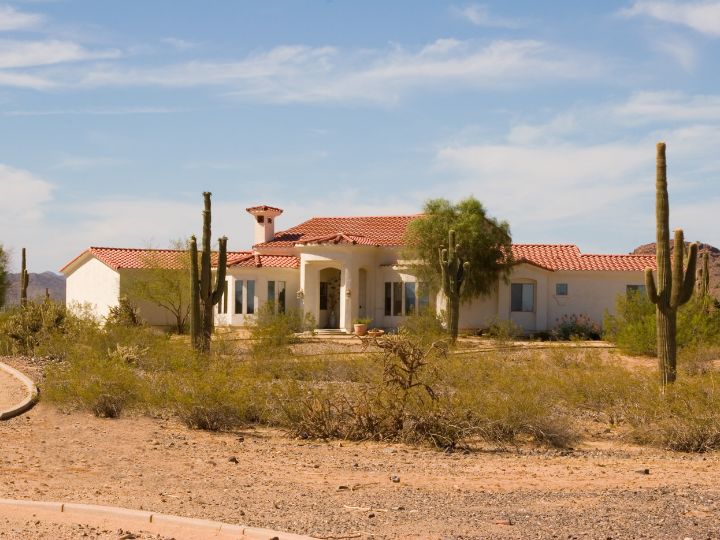
Heat-Resistant Materials: Building for Arizona's Intense Summer

Most homeowners don't think about building materials until something goes wrong. A deck that warped after one summer. Exterior paint that started peeling within a year. Grout that cracked, caulk that failed, hardware that corroded from the constant heat and UV exposure. By then, the damage is done and the repair bill is already in front of you.
Building and remodeling in Arizona is fundamentally different from doing it almost anywhere else in the country. The summer heat here isn't just uncomfortable — it's genuinely destructive to materials that weren't chosen with the climate in mind. Temperatures regularly push past 110°F. UV exposure is relentless. And the combination of intense heat followed by monsoon moisture creates conditions that expose every weak point in a home's construction.
The good news is that when you build or remodel with the right Arizona heat resistant materials from the start, those problems don't happen. The right choices hold up for decades. The wrong ones start showing their limitations within a season or two.
Here's what that looks like in practice.
Why Arizona's Climate Is a Different Kind of Challenge
Before getting into specific materials, it's worth understanding exactly what you're up against — because it's more than just "it gets hot."
The intense UV radiation in Arizona degrades organic materials faster than almost any other climate in the US. Wood fades, warps, and cracks. Certain plastics become brittle. Adhesives and sealants break down. Colors fade. Coatings that would last years in a milder climate start failing within months.
The thermal cycling — the daily swing from extreme heat during the day to cooler temperatures at night — creates constant expansion and contraction in building materials. Over time, that stress causes cracking, separation at joints, and failure at fasteners. This is especially hard on anything that spans a large surface area, like decking, patio covers, or exterior cladding.
And then the monsoons arrive. Materials that have been baking and drying out all summer suddenly face moisture, wind, and rapid temperature drops. Anything that has already been weakened by the heat takes the hardest hit.
Choosing durable materials for the desert means accounting for all of these forces together, not just the temperature number on the thermometer.
Exterior Siding and Cladding
Your home's exterior takes the most direct punishment from the Arizona sun. Whatever you put on the outside of your home needs to hold its color, resist warping, and maintain its integrity through years of UV exposure and thermal cycling.
Stucco has been the standard exterior finish in Arizona for a reason. When applied and finished correctly, it's one of the most durable and heat-tolerant exterior cladding options available. It reflects heat rather than absorbing it, handles thermal expansion well, and requires relatively low maintenance when properly sealed. It's not accident-proof — impact damage and moisture intrusion around windows or penetrations can cause issues — but for pure climate durability, it performs extremely well in the desert.
Fiber cement siding is another excellent option, particularly for homeowners who want the look of wood without the maintenance nightmare that wood creates in Arizona's climate. It doesn't rot, it resists UV degradation well, and it holds paint far longer than wood does. When it's painted with high-quality exterior paint rated for high UV exposure, it's a genuinely low-maintenance cladding choice.
What you want to avoid on Arizona exteriors is anything that relies on paint or coating adhesion to wood as a long-term strategy. Wood siding in Arizona requires constant maintenance, and when that maintenance lapses — even for one or two seasons — the damage accumulates fast.
Roofing Materials
The roof is the single most exposed surface on any building in Arizona, and what it's made of has a direct impact on both durability and energy efficiency.
Concrete and clay tile roofing is the dominant choice across the Valley for good reason. Both materials have excellent thermal mass, which means they absorb heat slowly and release it gradually rather than transferring it directly into the attic space. They're also highly resistant to UV degradation and can last 50 years or more when properly installed and maintained. Clay tile, in particular, has been used in desert climates for centuries — it's genuinely proven for this environment.
Reflective or cool roof coatings on flat or low-slope roofs are increasingly common on both residential and commercial buildings in Arizona. These coatings significantly reduce the amount of heat absorbed by the roof surface, which reduces cooling loads inside and extends the life of the underlying roofing membrane.
What tends to fail prematurely in Arizona is standard three-tab asphalt shingles. They're designed for moderate climates and degrade quickly under the combination of intense UV radiation and high temperatures. If your home has asphalt shingles and you're in the Valley, it's worth having the condition assessed — especially on older roofs.
Patio and Outdoor Flooring
For outdoor living spaces, flooring material choice is one of the most consequential decisions you'll make — both for durability and for the actual livability of the space during summer heat.
Travertine is one of the best patio surface materials for Arizona, and its popularity across the Valley reflects that. It naturally stays cooler underfoot than concrete or dark pavers, which matters enormously when you're walking barefoot from the pool to the covered patio. It's also highly durable and holds up well to the thermal cycling and moisture swings of Arizona's climate. The natural variation in travertine also means it doesn't show wear and fading the way uniform materials can.
Concrete pavers are another strong choice. They're extremely durable, available in a wide range of colors and finishes, and the modular nature of pavers means that if one shifts or cracks over time, it can be replaced without disturbing the rest of the surface. For best performance in Arizona, lighter-colored pavers are significantly better than dark ones — dark surfaces can reach surface temperatures well above the ambient air temperature in direct sun, making them genuinely painful to walk on and uncomfortable to be near.
What doesn't hold up well outdoors in Arizona is standard poured and stained concrete without a UV-stable sealer. The combination of sun exposure and thermal cycling causes cracking and surface degradation over time, and once the surface starts going, it's difficult to restore without a full redo.
Outdoor Kitchen and Structure Materials
If you're building an outdoor kitchen or any permanent structure in your backyard, the material choices are especially important because these features are meant to last decades.
For outdoor kitchen countertops, porcelain tile, concrete, and natural stone — particularly granite — are the best performers in the Arizona climate. They handle heat directly from cooking surfaces without issue, they don't degrade under UV exposure, and they hold up through the monsoon season without absorbing moisture. Engineered stone products like quartz perform well indoors but can fade and degrade under prolonged direct sun exposure, so placement matters if you go that route.
For the structure itself — the columns, bases, and cladding around an outdoor kitchen or outdoor bar — concrete block, stucco, and stone veneer are all excellent choices. They're thermally stable, don't rot, and look as good in year ten as they did when they were built. Stainless steel appliances are the standard for outdoor kitchen equipment in Arizona for the same reason — they don't corrode, they clean easily, and they handle the temperature extremes without issue.
Wood used in outdoor structures in Arizona needs to be chosen and treated carefully. Naturally rot-resistant species like teak, ipe, or cedar can work in covered applications, but require regular maintenance to prevent drying and cracking in the desert climate. For most homeowners, composite decking materials or powder-coated aluminum framing in outdoor applications offer better longevity with less ongoing maintenance.
Interior Flooring
The summer heat conversation isn't only about what's outside. Arizona's intense climate affects interior material choices too — particularly flooring.
Tile and stone are the dominant flooring choices in Arizona homes for good reason beyond just aesthetics. They stay cool underfoot even when the air conditioning is working hard, they handle humidity changes well, and they're essentially impervious to the conditions that damage other flooring types. Porcelain tile in particular is dense, low-maintenance, and extremely durable — a well-installed tile floor can last the lifetime of the home.
Wood flooring in Arizona requires more care and thought than in other climates. The low humidity in the desert causes wood to dry and contract, which can lead to gapping between boards. If you love wood floors, engineered hardwood handles the humidity swings better than solid hardwood, but even then, proper climate control and humidity management inside the home is important. Wide plank floors are more vulnerable to this movement than narrower planks.
Luxury vinyl plank has improved dramatically as a product and handles the thermal and humidity conditions in Arizona well — though it's worth knowing that very high temperatures in rooms that aren't well air-conditioned can affect its dimensional stability over time.
Windows and Glazing
Windows are one of the most significant contributors to heat gain in Arizona homes, and the glazing choices you make have a real impact on both energy efficiency and long-term durability.
Low-E (low-emissivity) double-pane windows are the baseline for any remodel or new build in Arizona. The low-E coating reflects infrared radiation while still allowing visible light through, which significantly reduces solar heat gain without making the interior feel dark. In a Phoenix-area home, the right window specification can meaningfully reduce cooling loads during summer heat.
For homes with significant west or south-facing window exposure, adding exterior shading — overhangs, screens, or motorized shades — in combination with good glazing creates an even more effective barrier against summer heat gain.
Window frames matter too. Vinyl and fiberglass frames handle the thermal expansion and contraction of Arizona's climate better than wood, and don't require the maintenance that wood frames demand in a high-UV environment.
Building Right the First Time
The common thread across all of these material choices is the same: the upfront investment in the right materials pays for itself in longevity, reduced maintenance, and performance. The materials that fail prematurely in Arizona's climate almost always do so because they were selected for a different climate, or because cost was prioritized over durability.
At The Contractor Guys, we've been building and remodeling homes across Phoenix, Tempe, Scottsdale, Chandler, Gilbert, and Mesa long enough to know exactly which materials hold up and which ones don't. Every recommendation we make is informed by that experience — not just by what looks good in a catalog.
Whether you're planning a kitchen remodel, adding an outdoor entertaining space, building a home addition, or taking on a complete home remodel, we'll make sure the materials specified for your project are built to perform in the Arizona climate for the long haul.
Ready to build something that actually lasts? Reach out to The Contractor Guys and let's talk about your project.
Latest Blogs


Transform your dream home into reality with our premier renovation services!
Book a call with us today and let's create the perfect space tailored just for you.