
.svg)
.svg)
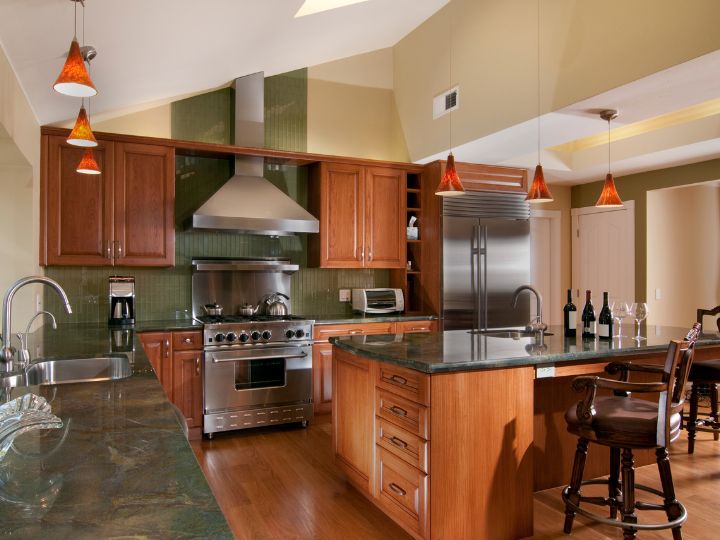
Choosing the Perfect Kitchen Countertops: Material Guide & Comparisons

If there's one decision in a kitchen remodel that homeowners agonize over more than any other, it's countertops. And honestly? That makes complete sense. Your countertops cover more visual real estate than almost anything else in the kitchen. They're what you see first, what you touch every single day, and what guests notice the moment they walk in. Get it right, and the whole kitchen comes together. Get it wrong, and it'll bother you every time you make coffee.
The challenge is that there are a lot of options out there — and a lot of conflicting opinions about which material is "the best." The truth is, the best countertop for your kitchen depends on how you cook, how you live, what you value, and what you're willing to maintain. There's no universal winner. But there's definitely a right answer for your home.
Let's break it all down.
Quartz: The Crowd Favorite for Good Reason
If you've done any kitchen research in the last five years, you've probably noticed that quartz comes up constantly — and for good reason. It's consistently one of the most popular countertop materials we install here in the Phoenix area, and homeowners love it for a combination of reasons that are hard to argue with.
Quartz countertops are engineered stone, meaning they're made from about 90 to 95 percent ground natural quartz combined with resins and pigments. Because they're manufactured rather than quarried as a slab, they're non-porous. That's a big deal. A non-porous surface doesn't absorb liquids, which means no staining from red wine, coffee, or olive oil, and no need to seal it — ever.
Quartz is also extremely consistent in its appearance. Natural stones like granite have variation from slab to slab, which some people love and others find unpredictable. With quartz, what you see on the sample is very close to what you're going to get across your entire countertop run.
On the durability front, quartz is tough. It resists scratching better than many materials and holds up well to the demands of daily cooking. The one area where it falls short is heat — the resins in engineered quartz can discolor or crack if you set a hot pan directly on the surface. Trivets and pot holders are non-negotiable with quartz.
Pricing typically lands in the mid-to-upper range — generally $50 to $150 per square foot installed, depending on the brand and complexity. It's not the cheapest option, but the low maintenance and long lifespan make it a strong value for most homeowners.
Granite: The Classic That Earns Its Reputation
Granite has been the premium countertop choice in American kitchens for decades, and it hasn't lost its appeal. There's something about a genuine slab of natural stone that no engineered material has fully replicated — the depth, the variation, the sense that this piece of rock has been around for millions of years and will outlast your kitchen remodel by a long shot.
Each granite slab is unique. The veining, the color shifts, the mineral deposits — no two countertops are exactly alike, which is either a feature or a quirk depending on your personality. Some homeowners love the idea of having something one-of-a-kind. Others prefer the predictability of quartz.
Granite is extremely hard and scratch-resistant — harder than quartz, actually. It handles heat well too, so setting a hot pan down won't damage it the way it might quartz. For serious cooks who are in the kitchen constantly, granite's heat and scratch resistance is a genuine practical advantage.
The maintenance consideration with granite is sealing. Unlike quartz, granite is a natural porous stone, which means it needs to be sealed periodically — typically once a year or so — to prevent staining. It's not a difficult process, but it's a commitment. If you neglect sealing, liquids can work their way into the stone and leave permanent marks.
Pricing for granite is comparable to mid-range quartz — roughly $40 to $100 per square foot installed, though exotic or rare slabs can push well above that. The price variation in granite comes largely from rarity of the stone and the complexity of the slab pattern.
In our kitchen remodels across Phoenix and the surrounding area, granite remains a top choice for homeowners who want that authentic natural stone look and don't mind a little ongoing maintenance in exchange for genuine durability.
Quartz vs. Granite: The Head-to-Head
Since this is the comparison most homeowners are trying to work through, let's put it plainly side by side.
Quartz wins on: low maintenance, non-porous surface, consistent appearance, stain resistance, and ease of cleaning.
Granite wins on: heat resistance, scratch resistance, natural uniqueness, and — for some buyers — perceived prestige as a genuine natural stone.
Both are durable, high-quality materials that will hold up beautifully for decades when properly cared for. If you have young kids, cook frequently with liquids and sauces, or simply don't want to think about sealing ever again, quartz is probably your answer. If you love the look of natural stone, cook with a lot of heat, and enjoy the idea of a surface with genuine character, granite is a strong choice.
We genuinely enjoy helping homeowners work through this decision — it comes up in almost every kitchen remodel consultation we do.
Laminate: The Underdog Worth a Second Look
Laminate gets a bad rap, and some of it is deserved — based on outdated versions of the product. The laminate countertops of the 1970s and 80s were thin, prone to chipping, and looked, well, cheap. But modern laminate has come a long way, and it deserves a fair evaluation.
Today's laminate countertops feature high-definition printing technology that can mimic the look of marble, granite, or wood with remarkable accuracy. The surface is scratch-resistant, easy to clean, completely non-porous, and requires virtually no maintenance. And the price point is significantly lower than stone — typically $15 to $40 per square foot installed — which makes it genuinely attractive for budget-conscious remodels or rental properties.
The honest drawbacks: laminate can't be repaired if it chips or burns, and up close, it still doesn't look or feel like stone. The seams where pieces meet can also be visible in a way that natural stone slabs avoid. But if your priority is function and budget over premium aesthetics, laminate is a practical and underrated option.
Butcher Block: Warmth and Character, With Trade-Offs
If you've been scrolling through kitchen inspiration on Pinterest or Instagram, you've definitely seen butcher block countertops. There's a reason they keep showing up — they bring a warmth and organic character to a kitchen that stone and engineered materials simply can't replicate.
Butcher block is exactly what it sounds like: thick slabs of wood, typically maple, walnut, oak, or cherry, bonded together to create a durable work surface. It looks incredible in farmhouse, transitional, and even modern kitchens when paired thoughtfully with other materials.
On the practical side, butcher block is gentler on knives than stone — your blades will thank you. It's also repairable in a way that stone isn't; scratches and surface damage can be sanded out and the surface re-oiled to look new again. That repairability is a genuine advantage for a surface that sees daily use.
The trade-offs are real, though. Wood is sensitive to moisture and heat. Standing water left on a butcher block surface can cause warping or cracking over time, which makes it a riskier choice near a sink. It needs to be oiled regularly to stay protected and looking good. And in Arizona's dry desert climate, wood can be prone to cracking if the indoor environment fluctuates significantly.
Many homeowners split the difference by using butcher block for a specific section — a prep island or a dedicated cutting area — while using quartz or granite for the main perimeter runs. It's a combination that looks beautiful and plays to the strengths of both materials.
Pricing for butcher block typically runs $40 to $100 per square foot installed, depending on the wood species and thickness.
A Few Other Materials Worth Mentioning
While quartz, granite, laminate, and butcher block cover the majority of what homeowners are choosing right now, a few other materials come up in conversations worth a quick note.
Marble is stunning — there's no countertop material more elegant. But it's soft, porous, and prone to etching from acidic foods like lemon juice and vinegar. It's a beautiful choice for homeowners who accept its high-maintenance nature as part of the charm, but it's not forgiving in a busy working kitchen.
Concrete countertops offer an industrial-modern look that works beautifully in the right kitchen. They're customizable in shape and color, but they require regular sealing and can crack over time. They're also heavy, which can affect cabinet structure.
Porcelain slabs are an emerging option that's gaining traction — incredibly durable, heat-resistant, non-porous, and available in large format sizes that minimize seams. They're worth asking about if you want a cutting-edge option.
How to Make the Right Choice for Your Kitchen
Here's how we help clients work through this decision in real projects.
Start with how you actually use your kitchen. Are you a serious cook with pots and pans on the stove constantly? Heat resistance matters — lean toward granite or porcelain. Do you have young kids and a busy household where spills are a given? A non-porous, low-maintenance surface like quartz makes life easier. Are you remodeling a rental or working within a tight budget? Laminate is a smart, functional choice.
Then think about the rest of your kitchen design. The countertop material needs to work with your cabinet colors, flooring, backsplash, and overall style. A dark, dramatic granite slab can anchor a kitchen beautifully — or overwhelm it, depending on everything else in the space. This is where having an experienced remodeling team in your corner makes a real difference.
Finally, think about the long game. A countertop is a long-term investment. Spending a little more upfront on a material you love and that performs well for your lifestyle will always beat saving money on something that frustrates you for the next 15 years.
Ready to Choose Your Perfect Countertop?
At The Contractor Guys, we've installed countertops in all of these materials across hundreds of kitchen remodels in Phoenix, Tempe, Scottsdale, Mesa, Chandler, and Gilbert. We know what holds up in Arizona homes, what our clients love five years after the project is done, and how to help you make a decision you'll be genuinely happy with.
If you're planning a kitchen remodel and want to talk through your countertop options with a team that will give you straight, honest answers — not just tell you what you want to hear — we'd love to connect.
Latest Blogs


Transform your dream home into reality with our premier renovation services!
Book a call with us today and let's create the perfect space tailored just for you.