
.svg)
.svg)

Energy-Efficient Home Upgrades: Save Money & Help the Planet

Let's be honest — energy bills in Arizona are no joke. When summer temperatures push past 110°F and your AC is running around the clock, the cost of keeping your home comfortable can feel like a second mortgage. That's exactly why more and more Phoenix-area homeowners are turning to energy-efficient remodeling — not just because it's the right thing to do for the planet, but because it genuinely saves money month after month, year after year.
The good news is that going green doesn't mean gutting your entire home or blowing your budget. Smart, targeted upgrades can make a significant difference in how your home performs — and how much you pay to run it. Here's what you need to know.
Why Energy Efficiency Matters More in Arizona
Most energy-efficiency conversations are written with a national audience in mind. But in the Phoenix metro — Tempe, Scottsdale, Mesa, Chandler, Gilbert — the stakes are a little different. Our desert climate puts extreme demands on homes. The sun beats down on roofs and walls for months at a time. Cooling costs dominate energy bills. And poorly insulated or poorly sealed homes work twice as hard just to stay livable.
That means energy-efficient home improvements deliver outsized returns here compared to most other parts of the country. When you seal air leaks, upgrade insulation, and install efficient systems, you're not saving a little — you're potentially cutting your cooling costs by 20 to 30 percent or more, depending on how inefficient your current setup is.
Start With the Envelope: Insulation and Air Sealing
Before you think about appliances or solar panels, the most impactful place to start with green remodeling is the building envelope — the walls, attic, and foundation that separate your conditioned indoor space from the brutal Arizona heat outside.
Attic insulation is the single biggest opportunity in most Phoenix-area homes. Heat radiates through the roof and pours into living spaces when attic insulation is inadequate. Upgrading to the proper R-value for our climate (R-38 to R-60 in most cases) can dramatically reduce how hard your AC has to work. It's not glamorous, but it's often the highest-return upgrade a homeowner can make.
Air sealing goes hand in hand with insulation. Gaps around recessed lights, attic hatches, plumbing penetrations, and wall outlets let conditioned air escape and hot air sneak in. Sealing these gaps is inexpensive relative to other upgrades, but the impact on comfort and efficiency is immediate and real.
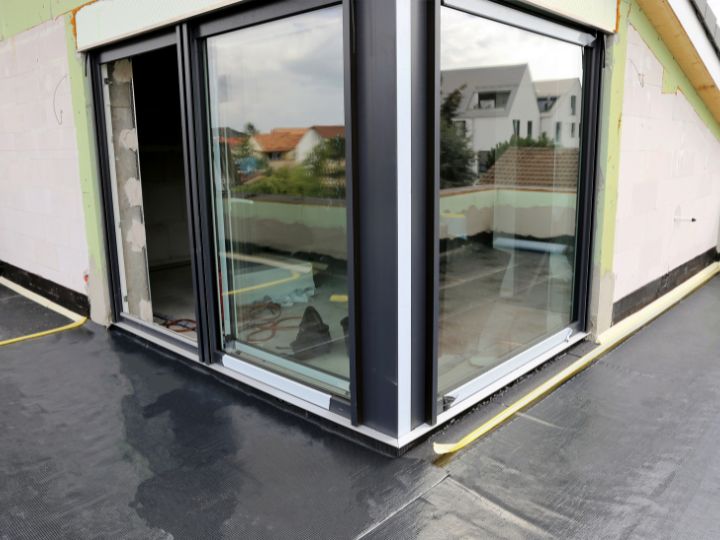
Windows are another major factor. Single-pane windows or older double-pane units that have lost their seal are basically holes in your home's thermal barrier. Upgrading to low-E, double-pane windows designed for hot climates reduces solar heat gain and keeps rooms cooler without working your AC overtime.
When we're doing a remodel for clients — whether it's a kitchen update or a whole-home renovation — we always look at insulation and air sealing as part of the bigger picture. It's one of those things that makes everything else work better.
HVAC: The System That Makes or Breaks Your Energy Bill
In Arizona, your HVAC system is the workhorse of your home. It runs longer and harder than systems in most other climates, which means efficiency ratings matter more here than anywhere.
If your system is more than 10 to 15 years old, it's likely operating at a fraction of its original efficiency — and original efficiency wasn't great by today's standards. Modern high-efficiency systems carry SEER2 ratings significantly higher than older equipment, which translates directly into lower monthly costs.
Variable-speed systems are worth paying attention to. Unlike traditional single-stage systems that run full blast or not at all, variable-speed units adjust their output to match what your home actually needs. They run longer at lower capacity, which keeps temperatures more consistent, removes more humidity from the air, and uses far less energy in the process.
During remodels, we often find that ductwork is just as much of the problem as the equipment itself. Leaky, uninsulated ducts running through hot attic spaces can waste 20 to 30 percent of the conditioned air before it ever reaches the living areas. Sealing and insulating ductwork is one of those behind-the-scenes upgrades that pays for itself quickly.
Energy-Efficient Appliances: The Visible Side of Green Remodeling
When homeowners think about eco-friendly home improvement, appliances are usually the first thing that comes to mind — and for good reason. Today's Energy Star-certified refrigerators, dishwashers, and washing machines use significantly less electricity and water than models from even five to ten years ago.
In the kitchen specifically, induction cooktops are having a major moment. They're more energy-efficient than gas or traditional electric ranges, they heat faster, and they produce no combustion byproducts indoors. For homeowners doing a kitchen remodel, switching to induction is one of those upgrades that delivers on both the efficiency and the experience fronts.
Tankless water heaters are another upgrade that makes a lot of sense in Arizona homes. Traditional tank water heaters keep 40 to 50 gallons of water hot around the clock, whether you're using it or not. Tankless units heat water on demand, eliminating standby heat loss. They last longer than traditional units too, which adds to the long-term value.
When you're already opening up walls and updating systems during a remodel, it's the ideal time to make these swaps. The incremental cost of upgrading to an efficient appliance during a planned renovation is almost always lower than replacing it as a standalone project later.
Smart Home Technology: Small Upgrades, Real Savings
You don't have to do a major remodel to start seeing efficiency gains. Smart thermostats — like Nest or Ecobee — learn your schedule and optimize your cooling and heating automatically. In a climate like ours, a smart thermostat can easily save $100 to $200 or more per year just by not running the AC at full capacity when no one is home.
Smart irrigation controllers are another Arizona-specific win. Landscaping accounts for a significant portion of water use in desert homes, and a controller that adjusts watering schedules based on local weather data can cut outdoor water use substantially — which matters both for your water bill and for the region's long-term water supply.
LED lighting upgrades throughout the home are low-cost, high-impact, and honestly — there's no reason not to do them. Modern LED fixtures and bulbs use up to 75 percent less energy than incandescent alternatives and last years longer.
Windows, Doors, and Exterior Upgrades
Beyond insulation and systems, the exterior finishes of your home play a role in energy performance too. Cool roof coatings and reflective roofing materials are designed specifically for hot climates, reducing the amount of solar heat absorbed through the roof surface. In Arizona, this is a meaningful upgrade — especially for flat or low-slope rooflines common in Southwestern architecture.
Exterior door upgrades — replacing hollow-core or older doors with insulated, energy-efficient units with proper weatherstripping — close off another common source of energy loss. It's a smaller piece of the puzzle, but every gap sealed contributes to the overall performance of your home.
The Financial Case: Rebates, Incentives, and ROI
Energy-efficient remodeling isn't just good for the environment — it's good for your bottom line, especially right now. Federal tax credits through the Inflation Reduction Act cover a meaningful percentage of costs for qualifying upgrades like insulation, windows, doors, heat pumps, and more. Arizona also has utility rebate programs through APS and SRP that can offset upgrade costs.
Beyond incentives, the return on investment for energy-efficient upgrades comes from two directions: lower monthly operating costs and higher home value. Studies consistently show that energy-efficient homes command higher sale prices and spend less time on the market. If you're planning to stay in your home for years, the monthly savings add up fast. If you're thinking about selling someday, efficiency upgrades are a selling point that buyers in Phoenix increasingly care about.
Bringing It All Together During a Remodel
Here's the thing about energy-efficient upgrades — the best time to make them is when you're already doing other work. If we're opening up walls for a kitchen remodel, that's the moment to add insulation and seal penetrations. If we're updating a bathroom, that's the right time to swap in a tankless water heater. Bundling efficiency upgrades into a broader remodel reduces labor costs and minimizes disruption.
At The Contractor Guys, we take a whole-home perspective on every project. We're not just thinking about how your kitchen looks when it's done — we're thinking about how it performs. How it saves you money. How it makes your daily life better. That's the approach a family business takes when they're just as invested in your home as you are.
Ready to Make Your Home More Efficient?
If you're ready to explore energy-efficient home remodeling in Phoenix , Tempe, Scottsdale, Mesa, Chandler, or Gilbert, we'd love to have a conversation. Whether you're planning a full renovation or just looking for the highest-impact upgrades to start with, our team will walk you through your options honestly and help you build a plan that makes sense for your home and your budget.
Latest Blogs


Transform your dream home into reality with our premier renovation services!
Book a call with us today and let's create the perfect space tailored just for you.