
.svg)
.svg)
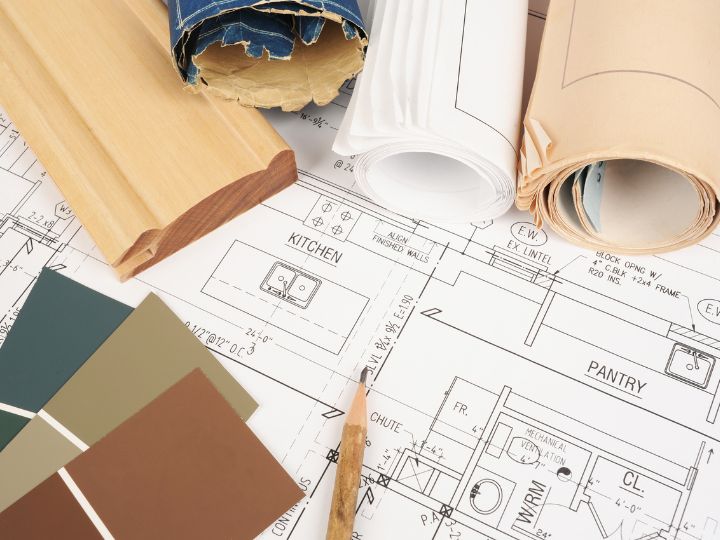
Kitchen Layout & Workflow: Designing for Efficiency

Most people don't realize their kitchen layout is the problem until they've cooked in a better one.
You've probably felt it without being able to name it. The frustration of turning around three times to get ingredients from the pantry, the cutting board, and the stove in the right order. The bottleneck when two people are trying to cook at the same time and keep stepping around each other. The counter space that always seems to disappear exactly when you need it most. The sink that's positioned just far enough from the stove that draining pasta becomes a minor athletic event.
None of these things feel like design problems in isolation. They feel like inconveniences. But they accumulate every single time you cook, and over years of living with a kitchen that doesn't flow the way it should, they add up to a lot of wasted motion, unnecessary frustration, and meals that are harder to prepare than they need to be.
Kitchen layout design is what solves this — not a new backsplash, not updated appliances, not better organization. The bones of the kitchen, the relationship between its key elements, the way it directs movement and supports the way you actually cook. Get the layout right and everything else becomes easier. Get it wrong and no amount of upgrades fully compensates. Here's what getting it right actually looks like.
The Work Triangle — Why It Still Matters
Kitchen design has evolved significantly over the decades, but the work triangle concept has stayed relevant because the problem it solves hasn't changed. You need to move between three primary stations constantly while cooking: the refrigerator where ingredients come from, the sink where washing and prep happen, and the stove where cooking happens. The relationship between those three points determines how much you're moving, how efficiently you're moving, and how much the kitchen gets in its own way.
The classic work triangle principle says that the total distance between those three points should be between 13 and 26 feet, with no single leg of the triangle shorter than 4 feet or longer than 9 feet. Within those parameters, the kitchen creates a compact, efficient cooking zone that minimizes unnecessary movement without cramping the space.
What breaks the work triangle — and why so many kitchens feel inefficient — is when one of those legs gets stretched too far, or when traffic from other parts of the house cuts through the middle of it. A refrigerator positioned on the far end of a galley kitchen from the stove forces you to carry ingredients across the entire length of the room every time you cook. A layout where the main walkway from the living room to the back door cuts directly through the cooking zone means that anyone passing through the kitchen while you're cooking creates an obstacle. These aren't abstract design problems. They're the specific reasons cooking in that kitchen feels harder than it should.
In modern kitchen remodeling design, the work triangle has been expanded into the concept of work zones — dedicated areas for prep, cooking, cleaning, and storage that each function independently but connect logically. For households where two people cook simultaneously, or where the kitchen handles both cooking and homework and coffee and everything else family life demands, work zones create a more nuanced solution than a triangle between three points. But the underlying principle is the same: the kitchen should direct movement efficiently, not fight against it.
The Layouts That Work — and What Each One Is Good For
Not every kitchen has the square footage or the structural flexibility to support any layout you want. The shape of the room, the location of doorways and windows, and the relationship to adjacent spaces all constrain what's possible. Understanding what each major layout does well helps you make the most of what you're working with.
The L-shaped kitchen is one of the most versatile and functional layouts for a wide range of room sizes. Two walls of cabinets and countertops meet at a corner, creating a natural work zone on the corner wall and leaving the rest of the space open. The L-shape keeps the work triangle compact, handles two-cook households well if counter space is adequate on both legs, and opens naturally to a dining area or living space — which is why it's the dominant layout in open floor plan homes. The weak point of an L-shaped kitchen is the corner itself, which can become dead storage if it's not designed thoughtfully.
The U-shaped kitchen surrounds three walls with cabinets and countertops, creating the most counter space and storage of any standard layout. It works exceptionally well for serious cooks who want dedicated zones for different tasks and aren't short on square footage. The challenge with a U-shape is that it can feel enclosed, and in a smaller room it can create a corridor that's genuinely too tight for comfortable movement — the legs of the U should be at least 5 feet apart to allow two people to work without collision. In a larger kitchen, a U-shape with an island in the center becomes one of the most functional layouts available.
The galley kitchen — two parallel walls of cabinets and countertops — is the most efficient layout by pure distance-traveled metrics, which is why it's been the standard in professional restaurant kitchens for as long as restaurant kitchens have existed. In a residential context, it works extremely well in a dedicated kitchen space where traffic doesn't need to pass through. The problem is that most residential galleys have a door at each end, which means the kitchen becomes a corridor and the work zone gets constantly interrupted. If you're remodeling a galley, controlling the traffic flow — closing off one end, redirecting circulation around the kitchen rather than through it — is often the single most impactful change you can make.
The island kitchen takes any of the above base layouts and adds a freestanding or built-in island in the center. Done well, an island adds prep space, seating, storage, and a social gathering point that makes the kitchen the center of the home's daily life. Done poorly — an island that's too large for the space, positioned too close to the perimeter cabinets, or located in a spot that interrupts rather than supports the work triangle — it makes the kitchen worse. The standard minimum clearance between an island and surrounding cabinets is 42 inches for a single-cook kitchen and 48 inches for two-cook households. Below those numbers, the island creates congestion rather than solving it.
Counter Space: Never Enough Until It's Designed Right
Counter space is the thing homeowners complain about most in kitchens — there's never enough of it. But the problem is usually less about total linear footage and more about where the counter space is located relative to where you actually need it.
Counter space adjacent to the stove — on at least one side, ideally both — is where hot pans land, where finished dishes get plated, and where the constant back-and-forth of active cooking happens. Counter space adjacent to the refrigerator is where ingredients get set down when you're pulling them out and where meal prep begins. Counter space near the sink is where dishes stack before washing and where produce gets dried after rinsing. When these landing zones are in the right place, the kitchen flows. When they're not — when you're carrying a hot pan across the kitchen to find a surface, or setting ingredients on the island because there's nowhere logical near the fridge — the layout is working against you.
During a kitchen remodeling design process, counter placement should be driven by the actual sequence of tasks you perform when you cook — not just by where cabinet runs can be fit most efficiently. Identifying the specific pinch points in your current kitchen, where you always seem to be without a surface when you need one, tells you exactly where the new layout needs to prioritize counter space.
Counter height is the other factor that affects workflow more than most people realize. Standard counter height is 36 inches, which is designed for someone of average height doing average tasks. If you're taller, that height means you're bent over a cutting board for extended prep sessions, which adds up to real physical discomfort over time. Raising a prep section to 38 or 39 inches is a straightforward modification during a remodel and makes a significant difference in comfort for taller cooks. A lower section at 32 or 34 inches — at a dedicated baking area, for instance — makes tasks like kneading dough significantly easier and more comfortable. These aren't luxury customizations. They're ergonomic decisions that make the kitchen more functional for the people who actually use it.
Storage Placement That Supports the Way You Cook
A kitchen that looks organized isn't necessarily a kitchen that functions efficiently. Storage placement — not just storage quantity — is what determines whether your kitchen workflow is smooth or constantly interrupted by hunting for the thing you need.
The most used items should be the easiest to access. Everyday dishes near the dishwasher so unloading takes seconds. Pots and pans near the stove rather than across the kitchen. Spices and cooking oils within reach of the cooktop, not in a pantry that requires walking away from the stove. Coffee mugs near the coffee maker. Cutting boards near the primary prep area. These sound obvious, but in many kitchens they've been placed wherever cabinet space was available rather than wherever they'd actually support the cooking process.
Deep corner cabinets are the storage problem that most kitchens solve badly. Standard corner cabinets are difficult to access — things get pushed to the back and forgotten, and retrieving anything requires half a yoga pose. Lazy Susans help but don't fully solve it. Pull-out corner systems — blind corner pull-outs, magic corner units, or swing-out shelf systems — make the corner genuinely accessible and usable rather than a space that technically exists but practically doesn't. A kitchen remodeling project is the right time to address corner storage properly rather than accepting the same compromise.
Drawer storage for pots and pans, rather than deep lower cabinets, is one of the most functional changes you can make in a kitchen renovation. Deep drawers with full-extension slides allow you to see and access everything in the drawer without crouching down and reaching to the back of a dark cabinet. Once you've had them, standard lower cabinet doors feel like a step backward.
Ventilation, Lighting, and the Details That Affect Daily Function
Layout and storage solve the big problems. Ventilation and lighting solve the ones that affect your experience of the kitchen every single day in ways that are easy to underestimate.
Kitchen ventilation — a properly sized range hood or downdraft ventilation system — removes heat, steam, smoke, and cooking odors from the space while you cook. In Arizona's climate, where running the air conditioning efficiently matters, a kitchen that dumps heat and humidity into the home's air-conditioned space without adequate ventilation creates a real comfort and efficiency problem. A range hood sized appropriately for the cooktop — measured in CFM relative to the BTU output of the range — handles this correctly. Recirculating hoods that filter and return air to the kitchen rather than exhausting it outside are a compromise that makes sense in some situations but doesn't solve the heat problem the way a proper exhaust system does.
Lighting in the kitchen needs to work at two levels: general illumination for the whole space, and task lighting directed at the specific surfaces where work happens. Recessed overhead lighting provides the ambient level. Under-cabinet lighting — LED strips mounted to the underside of upper cabinets — puts direct, shadow-free light exactly where you're cutting, reading a recipe, or plating food. The difference between cooking in a kitchen with good under-cabinet task lighting and one without it is more significant than most people expect until they've experienced both.
Electrical outlets are the kitchen detail that causes the most frustration when there aren't enough of them in the right places. Countertops that don't have accessible outlets every few feet require appliances to be unplugged and moved to use, which means they don't get used. Outlets positioned at the back of the counter, behind where appliances sit, create cord management problems. During a remodel, it's worth thinking through exactly where you use countertop appliances and making sure outlets are positioned accordingly — including pop-up outlets in an island counter if that's where a lot of prep and appliance use happens.
When a Layout Change Makes Sense vs. Working with What You Have
Not every kitchen remodel requires moving walls or dramatically reconfiguring the layout. Sometimes the existing layout is fundamentally sound and the problems are solvable within the current footprint — better storage solutions, improved counter placement, an island added to an existing space, updated appliances repositioned for better workflow.
But sometimes the layout itself is the problem and working around it isn't the right answer. A galley where both ends are open to traffic. A kitchen where the refrigerator is in the wrong position relative to everything else and can't be moved without a full reconfiguration. A U-shape where the legs are too narrow to be comfortable. An L-shape that puts the sink on the wrong wall relative to where the dishwasher needs to be. In these cases, a remodel that addresses the layout structurally — even if it means moving a wall, relocating plumbing, or reconfiguring the entry — delivers a result that a surface-level remodel never can.
The way to know which situation you're in is to be honest about whether the daily frustrations you experience in your kitchen come from finishes and fixtures that could be updated, or from the fundamental relationship between the stove, the sink, the refrigerator, and the counter space around them. One is a cosmetic problem. The other is a layout problem. They require different solutions, and a kitchen remodel that addresses one without acknowledging the other is a missed opportunity.
A Kitchen That Works as Hard as You Do
The kitchen is the room that gets used more than any other in the house — morning, noon, and night, every single day. A kitchen layout designed around how you actually cook and move through the space pays that investment back constantly, in the form of meals that come together more easily, mornings that run more smoothly, and a space that supports your life instead of adding friction to it.
At The Contractor Guys, we design and build kitchen remodels for homeowners across Phoenix, Tempe, Scottsdale, Chandler, Gilbert, and Mesa with the same attention to how the space functions as we give to how it looks. Every layout decision is made around your specific kitchen, your specific cooking habits, and what the space needs to do for your household — not around a template pulled from a showroom floor.
If your kitchen has been frustrating you in ways you've learned to work around, let's talk about what's actually causing it and what it would take to fix it properly. Reach out to The Contractor Guys and let's design a kitchen that finally works the way it should.
Latest Blogs



Transform your dream home into reality with our premier renovation services!
Book a call with us today and let's create the perfect space tailored just for you.