
.svg)
.svg)
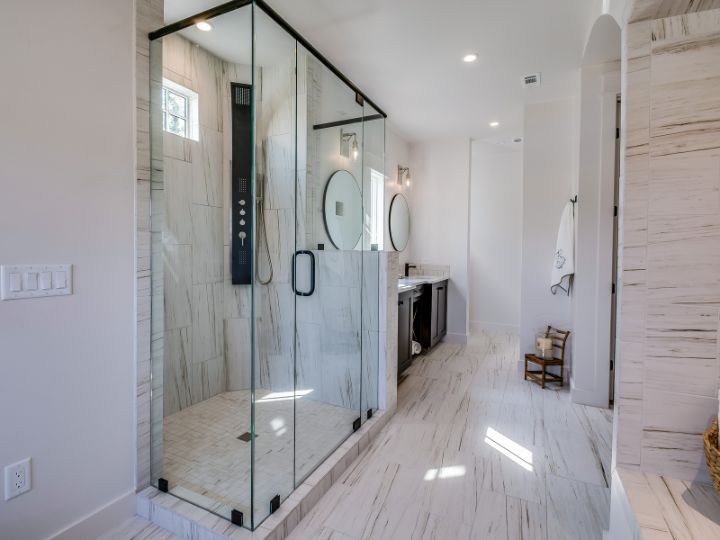
Wet Rooms & Walk-In Showers: Luxury Bathroom Features Explained

There's a particular moment in a well-designed shower that most people have experienced at least once — in a high-end hotel, at a vacation rental, maybe at a friend's recently remodeled home — where the space just feels different. The water pressure is right. The steam stays contained. There's no curtain to fumble with, no threshold to step over, no sense of being squeezed into a compartment. The whole experience feels intentional in a way that your bathroom at home doesn't.
That feeling isn't accidental, and it isn't reserved for hotels. It's the result of specific design decisions — the size of the shower, the way water is managed, the fixtures chosen, the materials used, the way light hits the space. And increasingly, it's what homeowners in Phoenix and across the Valley are choosing to bring into their own primary bathrooms through walk-in shower design and wet room builds.
These aren't niche luxury features anymore. They're the direction bathroom design has been moving for the better part of a decade, and for good reason. Here's what they actually are, how they differ, and what goes into designing one that delivers the experience you're actually after.
Walk-In Showers vs. Wet Rooms — What's the Actual Difference
The terms get used interchangeably sometimes, but they describe meaningfully different things, and understanding the distinction matters if you're planning a bathroom remodel.
A walk-in shower is an enclosed shower space — usually with at least one glass wall or panel — that you enter without stepping over a traditional curb or threshold. The defining feature is the open entry: no door to swing open, no curtain to pull aside, just a designed opening that lets you step directly into the shower. The water stays contained within the shower area through a combination of the enclosure design, the slope of the floor toward the drain, and sometimes a small lip or linear drain positioned at the entry point.
A wet room takes this further. In a true wet room, the entire bathroom floor — or a defined zone of it — is waterproofed and drained, so the shower has no enclosure at all. The shower head, whether fixed, handheld, or a rain head mounted in the ceiling, operates in a space that's continuous with the rest of the bathroom. The toilet, the vanity, and the bathtub if there is one all exist in the same waterproofed environment. Water goes wherever it goes, and the floor drains it away.
Wet rooms are more common in European bathroom design and have been gaining traction in the US as homeowners and designers have become more familiar with them. They create a genuinely open, spa-like atmosphere that's difficult to achieve any other way — there's no glass to clean, no enclosure to define the boundaries of the space, and the visual openness makes even a modest-sized bathroom feel significantly larger and more relaxed.
The trade-off is that wet rooms require more extensive waterproofing throughout the bathroom — walls, floors, and the surfaces around fixtures all need to be fully waterproofed, not just the shower area — and the design needs to manage water movement across a larger surface area carefully. Done correctly, a wet room is one of the most striking and functional bathroom configurations available. Done without proper waterproofing and drain design, it creates moisture problems that are expensive to repair. This is a project where the quality of the construction underneath the finishes matters just as much as the finishes themselves.
Why the Walk-In Shower Has Become the Standard for Primary Bathrooms
If you look at primary bathroom remodels across the Phoenix area over the last several years, the pattern is consistent: the traditional tub-and-shower combo or the fiberglass shower enclosure is coming out, and a properly designed walk-in shower is going in. Sometimes the freestanding soaking tub stays as a separate feature. Often it goes too, in favor of giving the shower the space it deserves.
The reasons are practical as much as aesthetic. Most homeowners with a tub-shower combination use the shower daily and the tub rarely — sometimes never. The tub takes up significant floor space, requires significant water to fill, and in a primary bathroom that's meant to be functional for everyday use, it's often the least used feature in the room. Replacing it with a generously sized walk-in shower reclaims that space for something that actually gets used every day and can be designed to be genuinely exceptional.
Size is the first thing that changes how a walk-in shower feels. The minimum code-compliant shower size — 36 by 36 inches — is functional but not comfortable. A shower that starts at 42 by 42 inches begins to feel less cramped. At 48 by 48 or larger, the shower becomes genuinely spacious. At 60 inches wide or beyond, you're in the range where two people can shower comfortably without negotiating space, where a built-in bench becomes a natural addition rather than a squeeze, and where the overall experience shifts from utilitarian to something closer to what you felt in that hotel shower.
The threshold — or the absence of one — matters more than most people expect. Stepping over a traditional curb to enter a shower is a small thing that most people do without thinking about it until they can't. A curbless entry that's flush with the bathroom floor makes the shower accessible for all ages and mobility levels, eliminates the visual interruption between the shower and the rest of the bathroom, and creates the seamless, open quality that defines the contemporary walk-in aesthetic.
The Rain Head — What It Does and Why It Works
No single fixture change shifts the character of a shower experience more than the overhead rain head, and no fixture in walk-in shower design is more frequently requested or more frequently installed incorrectly.
A rain head is a large-format shower head — typically 8 inches in diameter at minimum, often 12 inches or larger for the full effect — mounted directly overhead rather than on the wall. Water falls straight down from above, which creates a fundamentally different experience from a wall-mounted head: full, even coverage across the body, a gentle pressure that feels genuinely immersive rather than directed, and the closest approximation to standing in warm rain that indoor plumbing is capable of delivering.
The installation detail that determines whether a rain head delivers on that promise or disappoints is the mounting height. A rain head mounted at standard ceiling height in an 8-foot ceiling is fine. A rain head mounted at 9 or 10 feet — achievable with a coffered or raised ceiling detail in the shower — creates noticeably more presence and a more enveloping experience. The water has more distance to spread and the space below it feels more open.
The other detail is water pressure and volume. Rain heads are large, and they need adequate flow rate to perform the way they're designed to. A rain head that's running at the same pressure as a standard wall-mounted head will feel weak and unsatisfying — a gentle drizzle rather than the immersive coverage the head is designed for. This is a plumbing specification issue that needs to be addressed during the design and rough-in phase of a bathroom remodel, not after the tile is on the walls.
Most well-designed walk-in showers combine a rain head with at least one wall-mounted body spray or handheld component. The rain head handles the immersive, atmospheric experience. The wall-mounted or handheld head provides directed pressure for rinsing, hair washing, and cleaning the shower itself. Together, they create a shower system that's genuinely versatile rather than one that does one thing well and requires workarounds for everything else.
Body Sprays, Steam Systems, and the Features That Create a Spa Experience
Beyond the rain head, luxury bathroom features in a walk-in shower or wet room are about creating an experience that you actively look forward to rather than one you move through efficiently on the way to the rest of your morning.
Body spray systems — multiple shower heads or spray nozzles mounted at various heights on the shower walls — surround you with water from multiple directions simultaneously. Done well, they create a genuinely enveloping experience and are particularly effective for muscle relaxation. Done without adequate planning, they create a plumbing and water pressure management problem, since running multiple bodies sprays simultaneously requires a water volume that most residential plumbing systems aren't set up to handle without a dedicated thermostatic mixing valve and the right pipe sizing. If body sprays are on your list, that conversation needs to happen at the design stage — not after the walls are closed.
A steam system is the feature that most completely transforms a shower into a spa. A steam generator — typically a compact unit installed in a nearby cabinet or utility space — heats water to produce steam that fills the shower enclosure. In a properly designed steam shower, the enclosure needs to be fully sealed — a ceiling, either flat or slightly sloped to direct condensation away from your face, and no gaps that let steam escape. The materials in a steam shower also need to be selected for the continuous moisture and temperature exposure: natural stone, porcelain tile, and properly sealed grout all perform well; materials with organic content or inconsistent density can be problematic over time.
The experience of a steam shower — the deep warmth, the way it opens airways, the total sensory shift from stepping into a steam-filled enclosure — is something that's genuinely difficult to describe to someone who hasn't experienced it and immediately obvious to someone who has. For homeowners who are already investing in a high-quality walk-in shower remodel, adding a steam system is often the addition that makes the whole project feel like a true upgrade rather than just a nice-looking renovation.
Built-in seating is the other feature that moves a walk-in shower from comfortable to genuinely luxurious. A tiled bench seat — built into one wall of the shower or tucked into a corner — serves practical purposes: a place to sit during a steam session, a surface for shaving, a spot to rest a product or a glass in a way that a recessed niche doesn't quite accomplish. It also signals, in the way that only built-in elements can, that the shower was designed rather than assembled. A floating bench in natural stone or a large-format porcelain tile adds warmth and weight to the space in a way that a retrofit solution never replicates.
Materials, Tile, and the Visual Design of the Shower Space
The material choices in a walk-in shower or wet room are where the design moves from functional to genuinely beautiful — and where the decisions you make have long-term implications for both maintenance and durability.
Large-format tile is the defining material of contemporary walk-in shower design, and it dominates primary bathroom renovations across the Phoenix market for several overlapping reasons. Larger tiles mean fewer grout lines, which means less surface area that can harbor mold or require regular cleaning. They also create a cleaner, more expansive visual — a shower clad in 24-by-48-inch porcelain slabs reads as a single continuous surface rather than a grid of smaller tiles, which makes even a generously sized shower feel larger and more serene.
Porcelain tile that mimics the appearance of natural stone — marble, travertine, limestone — has become particularly popular in luxury bathroom features because it delivers the aesthetic of natural stone with significantly better performance in a wet environment. True natural stone is beautiful, but it requires sealing, it's porous enough to absorb moisture and staining agents, and in a steam shower especially, the maintenance demands are real. Porcelain that reads as stone gives you the visual warmth and variation of natural material without those concerns.
If you're using actual natural stone — and for the right project with the right client, it's a spectacular choice — the selection and installation details matter enormously. Marble in a steam shower needs to be fully sealed before installation and periodically resealed over time. The substrate needs to be properly waterproofed underneath, because natural stone is not itself a waterproofing layer. And the grout needs to be a high-quality epoxy or urethane product that won't crack or absorb moisture at the joints. These aren't obstacles to using natural stone — they're the things that ensure it performs as beautifully in year ten as it does in year one.
Niche shelving — recessed into the wall of the shower for shampoo, conditioner, body wash, and whatever else lives in your shower — is a detail that matters more for daily function than it might seem from a design perspective. A properly built niche, tiled continuously with the surrounding wall and sloped slightly to drain, is clean and permanent and creates a surface that holds exactly what it needs to without visual clutter. A surface-mounted shelf or a product basket hung from a shower head is a workaround that a well-designed shower doesn't need.
Waterproofing and Construction — The Part That Doesn't Get Photographed
The most important part of any walk-in shower or wet room build is the part that will never appear in a before-and-after photo. The waterproofing system underneath the tile is what determines whether the shower performs properly for decades or starts showing moisture problems within a few years.
Standard tile installation on a standard substrate is not adequate waterproofing for a shower. The tile itself is not waterproof. The grout between the tiles is not waterproof, regardless of how well it's sealed. The waterproofing layer needs to be under the tile — on the substrate, at the seams, at all transitions between walls and floors, around any penetrations — so that any moisture that gets through the surface has nowhere to go except back out.
Modern waterproofing systems — sheet membranes, liquid-applied membranes, foam shower bases with integrated waterproofing — have made this more reliable and more consistent than the traditional mud bed and felt paper approach. But they need to be installed correctly, with all transitions and seams addressed, and they need to extend far enough up the walls to handle the actual height of the water exposure in the shower.
In a wet room, where the waterproofing needs to cover the entire bathroom floor and extend up all walls to an adequate height, this is an even more significant part of the project. The waterproofing system in a wet room is a full-bathroom membrane installation — not just a shower pan — and the drain placement, floor slope, and surface material selection all need to work together with it to manage water correctly across the entire room.
This is the part of a luxury bathroom remodel where the quality of the contractor matters as much as the quality of the materials. A wet room or walk-in shower built on an inadequate waterproofing substrate looks identical to one built correctly — right up until the point where it doesn't.
Designing the Shower That's Right for Your Bathroom
The range of what's possible in a walk-in shower or wet room build is wide. A generous curbless walk-in with a rain head, large-format tile, and a built-in niche is a significant upgrade from a standard shower enclosure and doesn't require a full bathroom gut. A full wet room with a steam system, body sprays, natural stone, and a freestanding soaking tub in the same waterproofed space is a complete primary bathroom transformation.
The right choice depends on the size of your existing bathroom, the scope of change you're planning, your budget, and what your daily routine actually calls for. Not every homeowner needs a steam system. But most homeowners who are investing in a primary bathroom remodel benefit significantly from getting the shower right — the size, the entry, the fixtures, the materials — because it's the feature of the bathroom they interact with every single day.
At The Contractor Guys, we design and build walk-in showers and wet rooms for homeowners across Phoenix, Tempe, Scottsdale, Chandler, Gilbert, and Mesa — from targeted shower remodels to complete primary bathroom transformations. Every project is built on proper waterproofing, designed around how the space will actually be used, and finished with the craftsmanship and attention to detail that luxury bathroom features require.
If you've been thinking about what your primary bathroom could be, let's have that conversation. Reach out to The Contractor Guys and let's design a shower you'll actually look forward to using every morning.
Latest Blogs



Transform your dream home into reality with our premier renovation services!
Book a call with us today and let's create the perfect space tailored just for you.